What is BIA?
BIA, or bioelectrical impedance analysis, assesses body composition – the different components that make up your body, including body fat, muscle, bone and body water. By assessing body composition, you are provided with a deeper understanding of your body, where you store your weight, and which components are changing over time, rather than just your total body mass.
Can you complete the crossword below? (Answers at the end of the post)

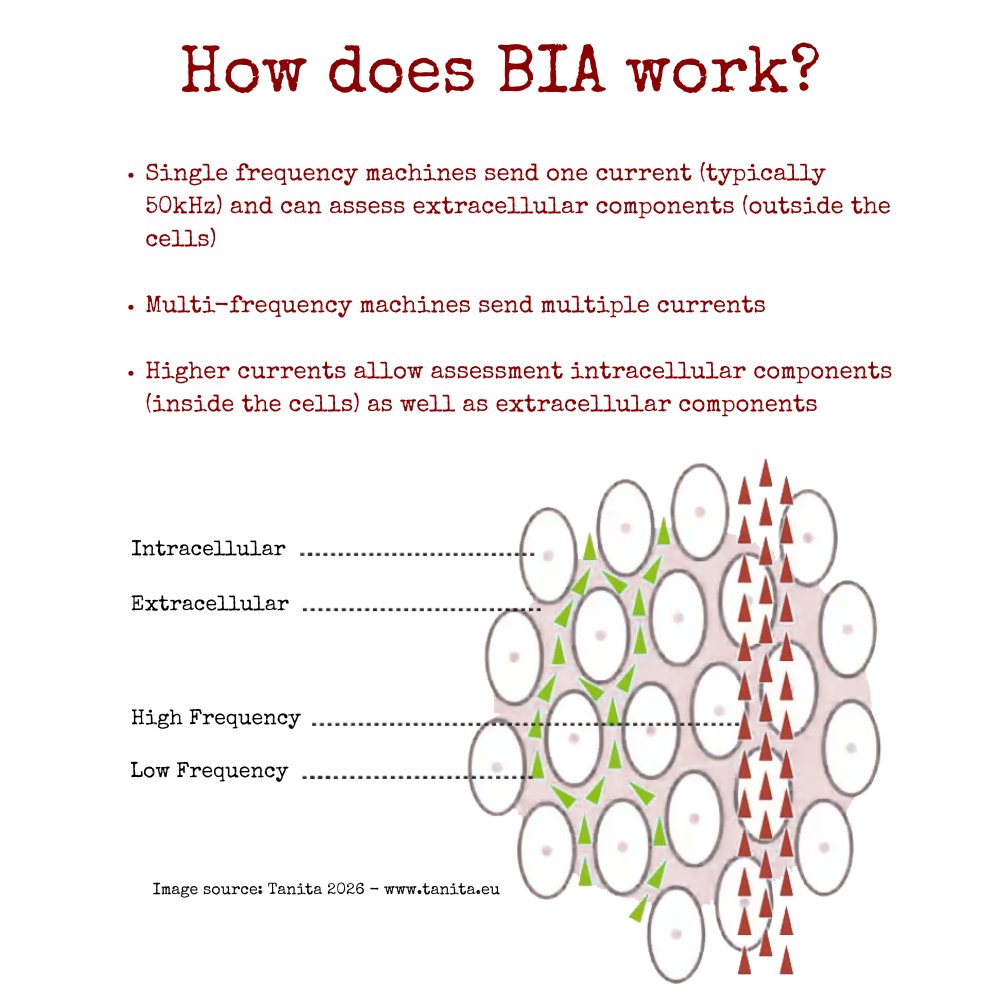
How does BIA work?
When you stand on a bioelectrical impedance analysis (BIA) machine, a small, safe electrical current is passed through the body via the metal electrodes on the base and/or handles. The machine then measures the resistance, also known as impedance, that the electrical current meets when passing through the body. Body fat, muscle, bone, and body water conduct electricity differently, with body fat providing more resistance than muscle and water.
Single-frequency machines send one current (typically 50kHz) allowing extracellular (outside the cells) assessment, whereas multi-frequency machines send multiple currents, with higher currents allowing assessment intracellular (inside the cells), as well as extracellular.

Why assess body composition?
– Track fat loss and muscle gain (not just weight changes)
– Get a clearer picture of your health
– Set smarter nutrition and training goals
– Identify hidden health risks
– Reduce risk of heart disease, diabetes and metabolic health issues
– Support healthy aging and reduced risk of frailty
Don’t just track weight, track what matters.

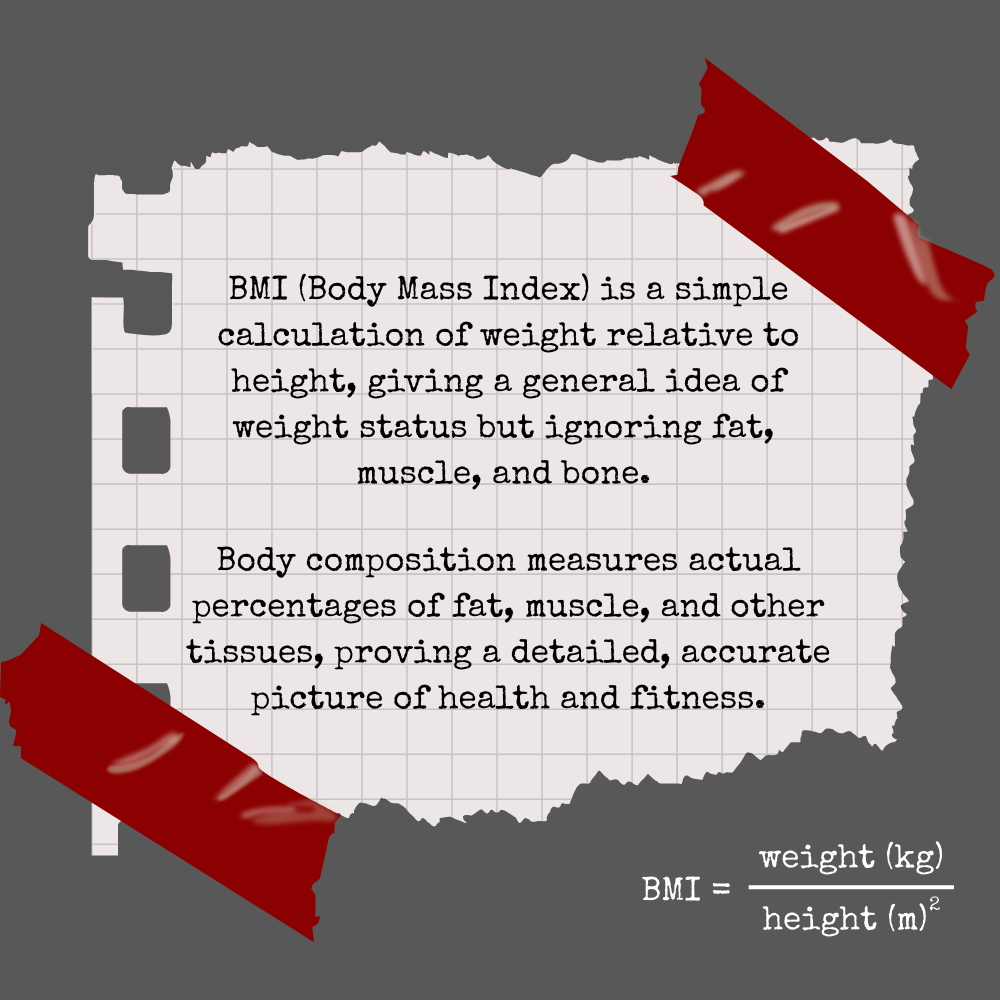
What’s the difference between BMI and body composition?
How did you go with the crossword?