Your body composition assessment is more than just a number on the scales. Let’s take a closer look at what your results mean and how they can help you understand your body and track your progress.
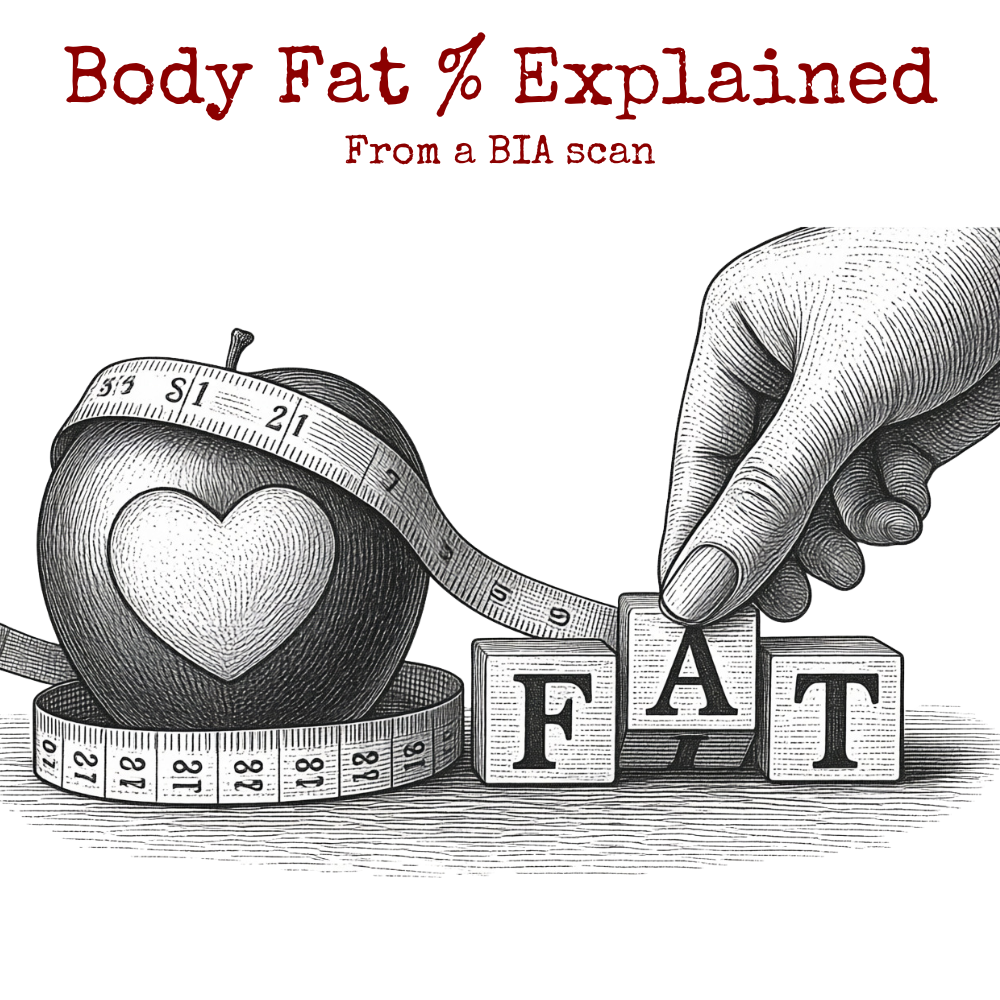
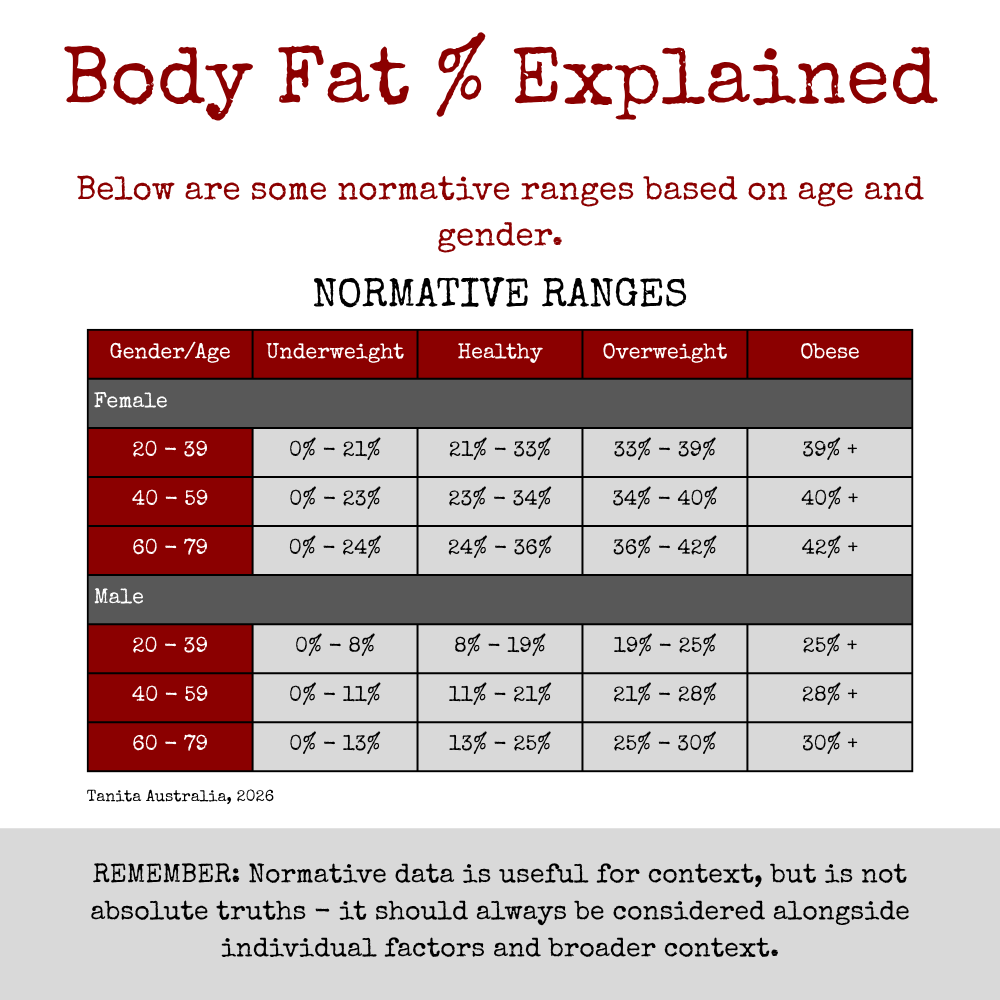
Body Fat Percentage (%) is the amount of fat in the body, shown as a percentage of your total body mass.
Body fat is essential for many health purposes, including regulating body temperature, protecting and insulating organs, and storing energy.
The body needs a minimum of 3% body fat to survive, however too much body fat can have a negative effect on long-term health, including increased risk of type 2 diabetes, heart disease, high blood pressure, and high cholesterol.
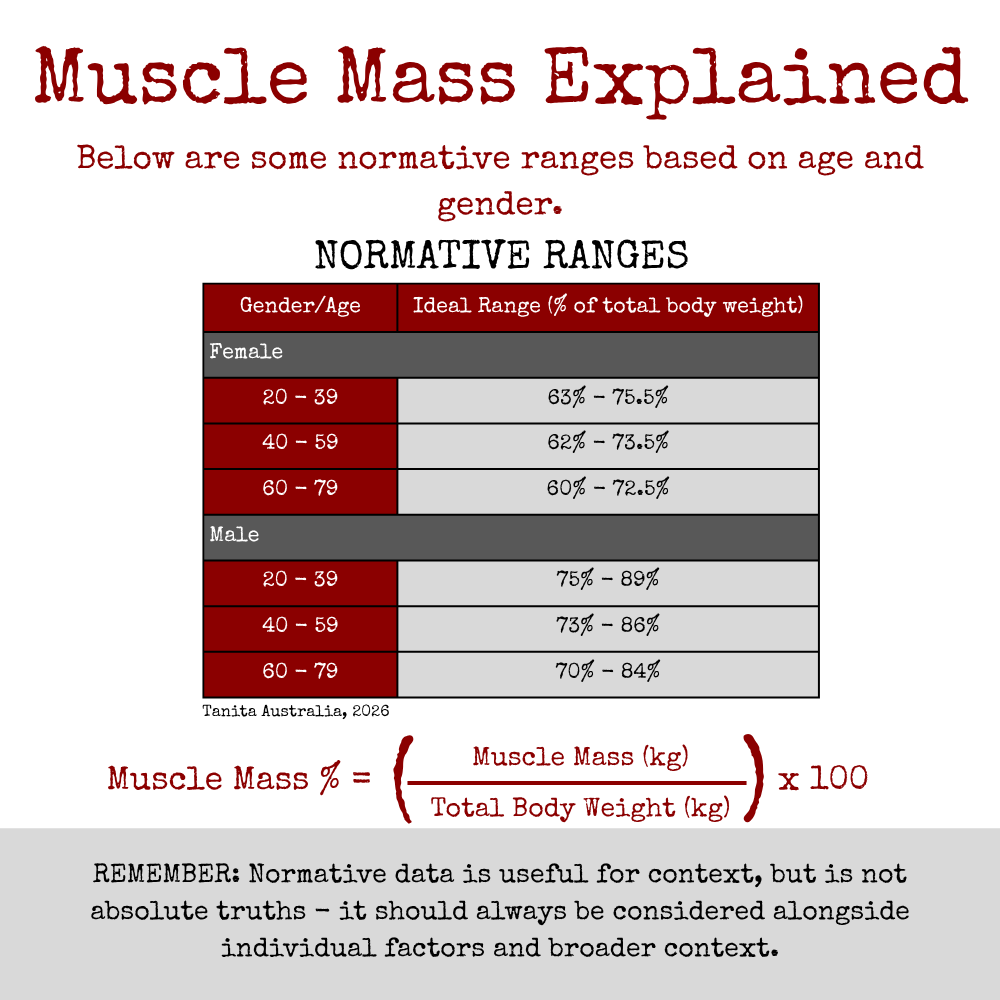
Muscle mass refers to the total weight of the muscle within the body. This includes skeletal muscle and smooth muscles (e.g. cardiac and digestive).
Muscle mass is important as it provides your strength for everyday tasks, helps improve posture and balance, increases metabolism, and is important to maintain as you age.
Muscle is denser than fat, so tracking changes in your body composition over time can provide a much clearer picture of your progress than simply watching the number on the scales.
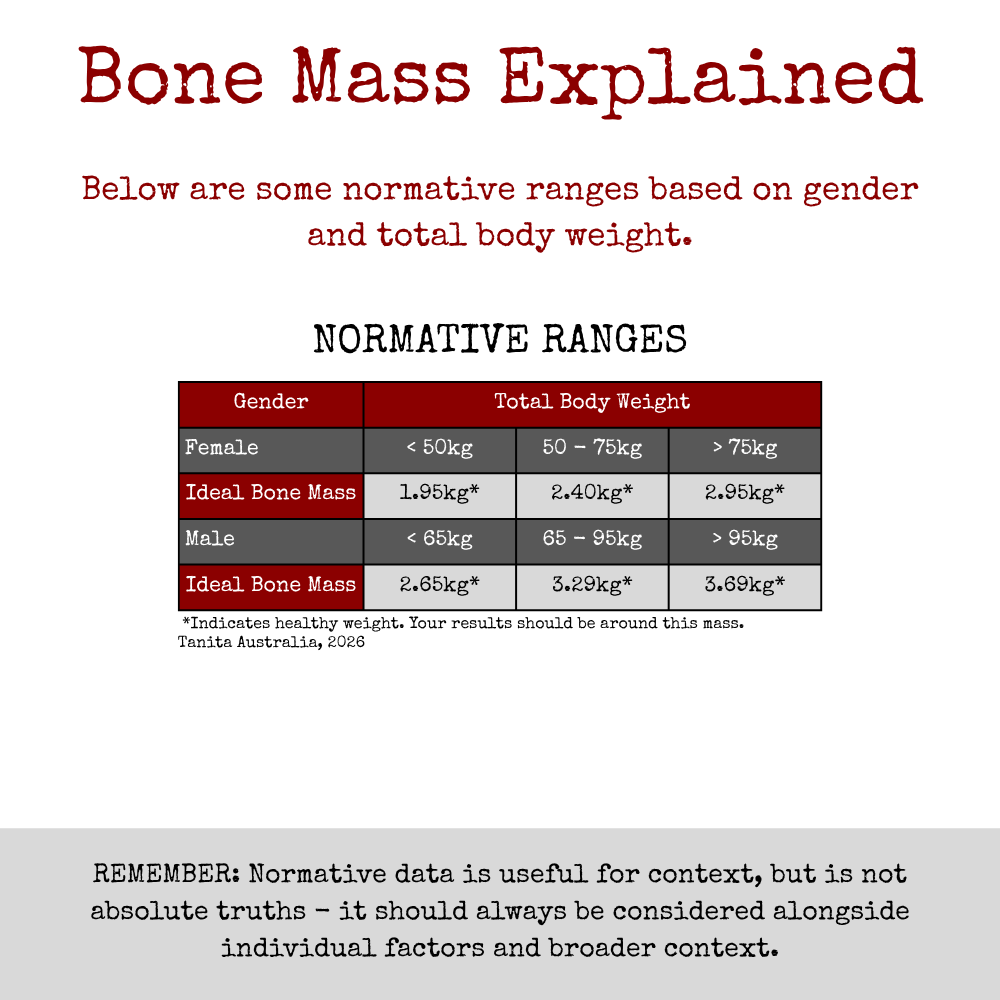
Bone mass refers to the amount of bone minerals present in the body, fundamentally estimating the weight of your bones. This includes minerals such as calcium, phosphorous, magnesium, and other minerals associated with bone health.
The data provided within a BIA scan CAN:
- Estimate the mineral content within your bones
- Track changes over time
- Be a general reference point within overall body composition
The data provided within a BIA scan CAN NOT:
- Diagnose osteoporosis or medical conditions
- Directly measure your bone density like a DEXA scan
- Directly measure fracture risk
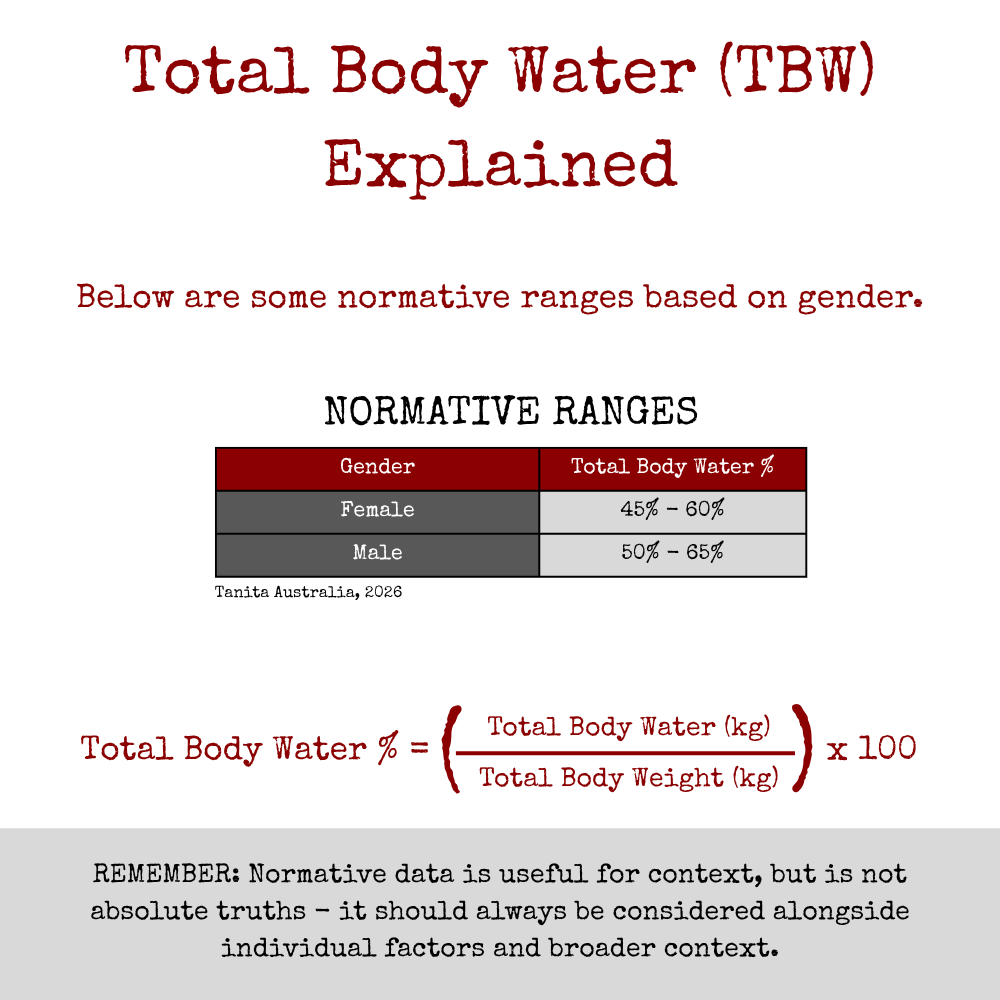
Total Body Water (TBW) is the amount of fluid in your body, both inside your cells and surrounding them. It makes up a large portion of your body weight and is essential for keeping everything functioning properly.
Keeping TBW within healthy ranges is beneficial as it ensures hydration, assists with muscle function and recovery, helps regulate temperature, and aids with digestion and nutrient transport.
Healthy TBW can be achieved through consistent hydration (ensuring adaptation is made depending on activity level, climate, and health status), along with increasing muscle mass as muscle tissue is highly water-rich, meaning when you build more muscle, you’re literally increasing the amount of water your body can store.
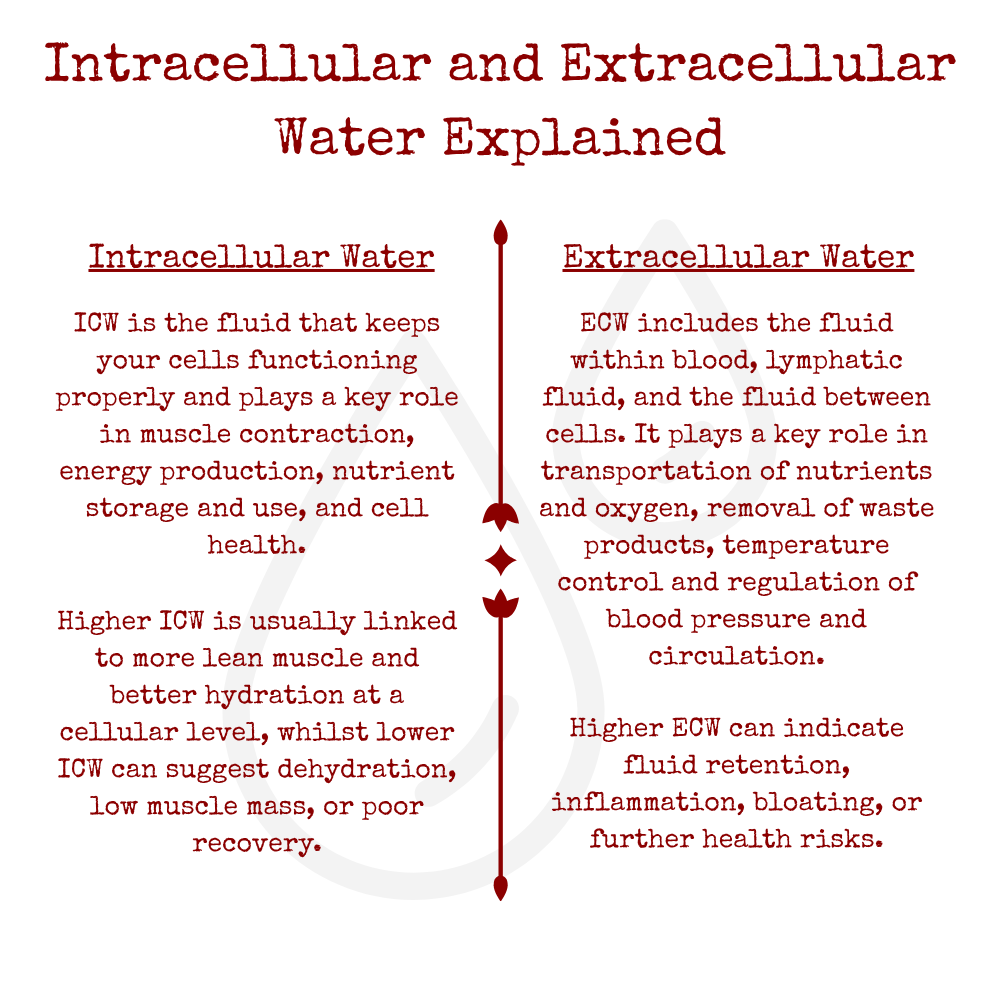
Total Body Water (TBW) is made up of Intracellular Water (ICW) and Extracellular Water (ECW).
ICW is the water located inside the cells and accounts for approximately 2/3 of TBW.
ICW is the fluid that keeps your cells functioning properly and plays a key role in muscle contraction, energy production, nutrient storage and use, and cell health.
ECW is the water located outside the cells and accounts for approximately 1/3 of TBW.
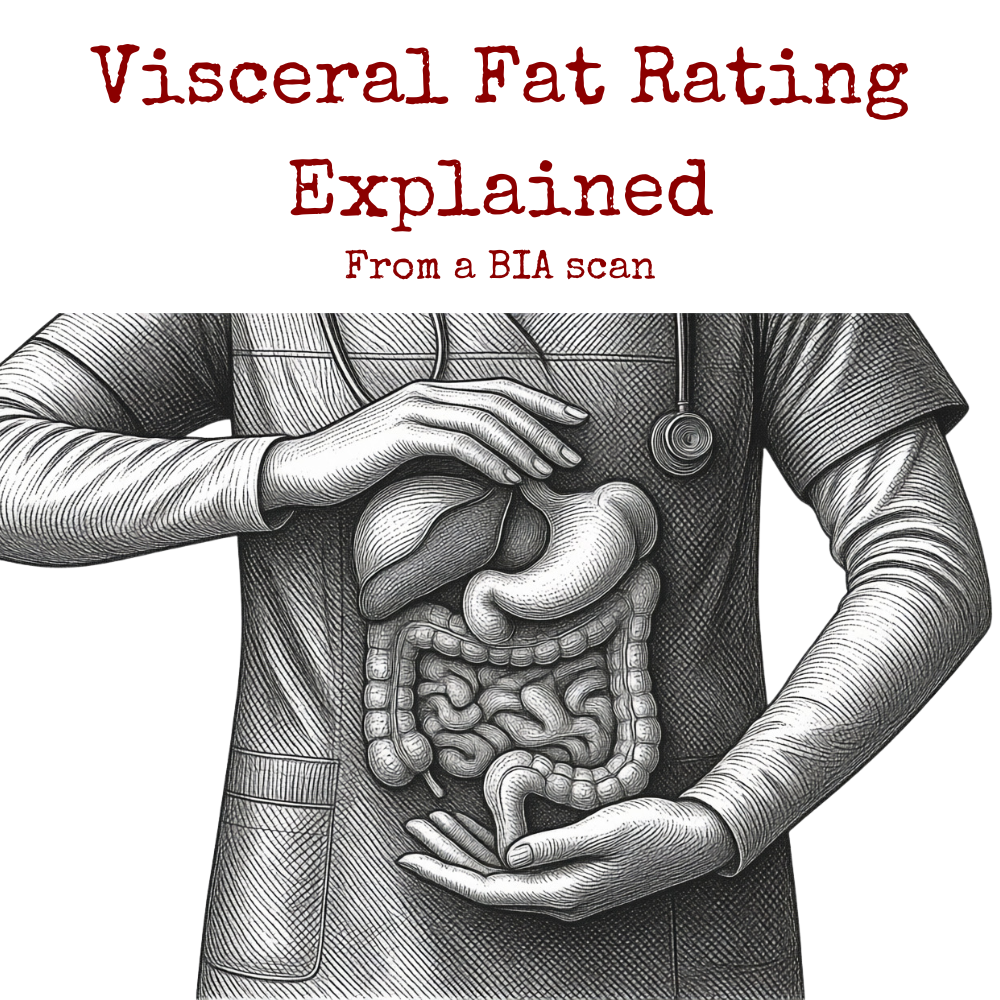
Visceral Fat refers to the fat located deep in the core abdominal area, surrounding and protecting the vital organs. It is normal to have some visceral fat, however too much can become harmful.
It is ‘metabolically active’, meaning it is actively involved in chemical processes that affect how your body functions. This includes production of chemicals and signals that can change things like blood sugar, inflammation, and hormone levels.
Visceral Fat can be reduced via physical activity, a balanced diet, and by managing stress levels.
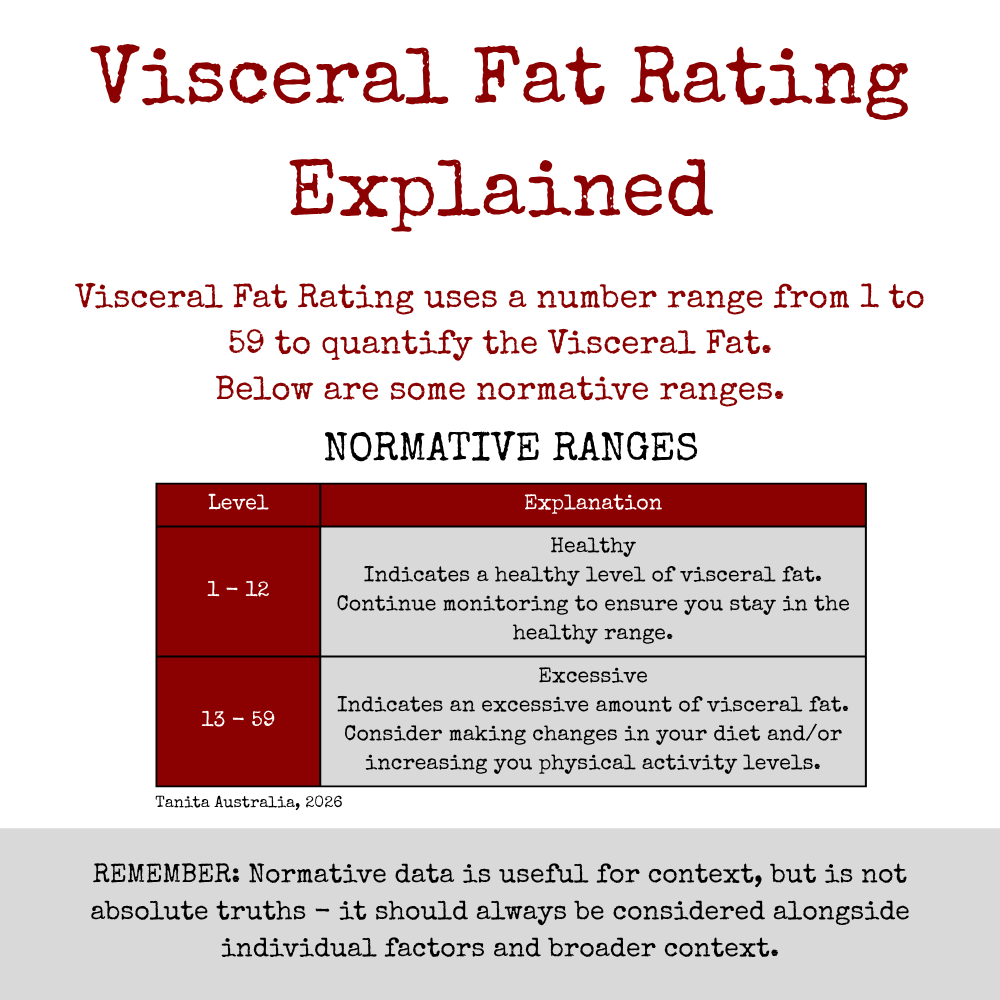
Visceral Fat Rating uses a number range from 1 to 59 to quantify the Visceral Fat.
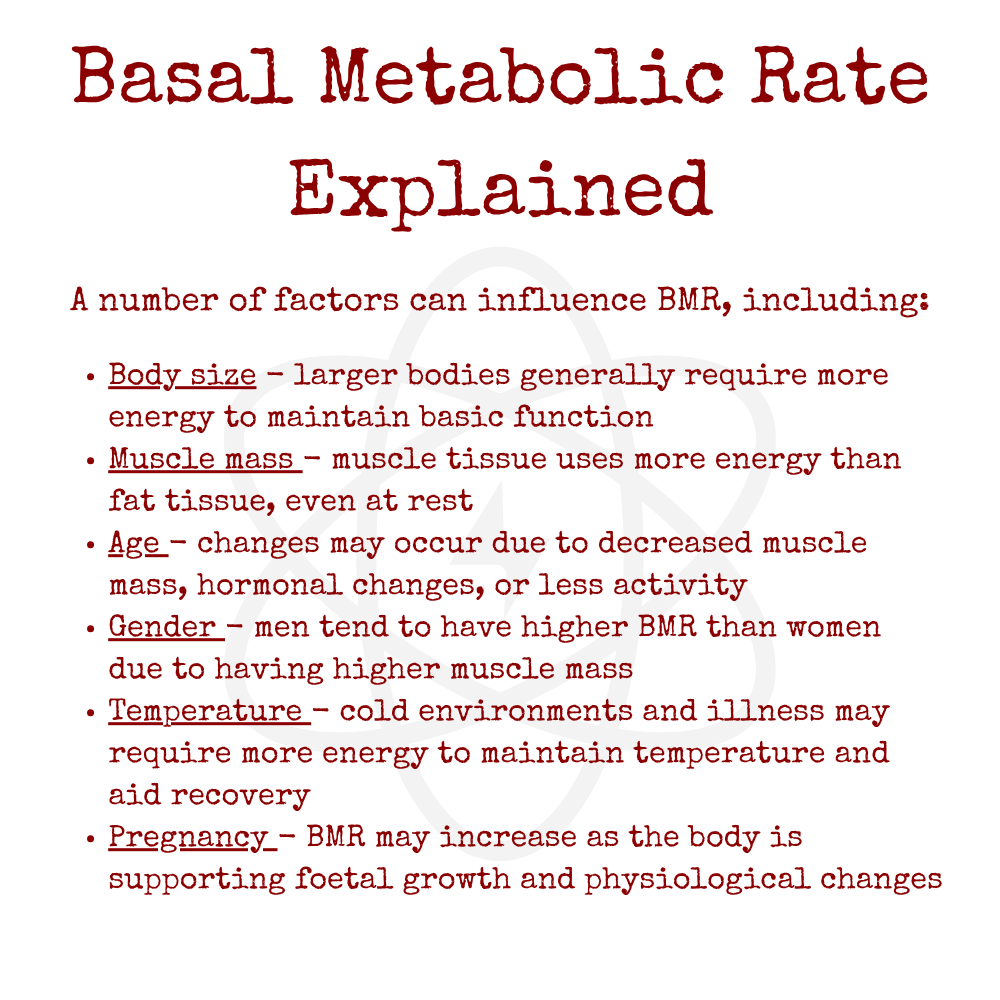
Basal Metabolic Rate (BMR) is the minimum amount of energy the body needs to function effectively when at rest. This includes functions such as:
- Breathing
- Circulating blood
- Maintaining body temperature
- Brain and nervous system activity
- Cell repair and hormone production
For most people, BMR makes up approximately 60-75% of total daily energy use.
BMR is NOT the same as the number of calories you burn in a day overall.
Understanding your BMR can assist with identifying your daily calorie needs. If you consistently consume more than your energy needs, this may lead to weight gain. If you consistently consume less than your energy needs, this may lead to weight loss.
NOTE: To ensure safety in calorie deficit diets, ensure you have the correct guidance and information to make healthy choices.